Just How To Check Out A Certificate Of Analysis Coa For Peptide Research Study
Exactly How To Check Out A Certification Of Evaluation Coa For Peptide Research Study
Customers need to additionally beware when documentation shows up repeated across various items or batches without significant variant. A batch-specific COA needs to mirror the product and test context clearly, not feel like a reused design template with only minor edits. Some files might look professional at first glance however still leave out information that matter when reviewing a peptide batch.- A Certificate of Analysis (COA) is a paper from an independent third-party research laboratory that confirms the identification, pureness, and top quality of a peptide product.
- In research study peptide sourcing, a COA helps buyers review whether the documentation offered matches the material being used.
- A Certificate of Analysis is a research laboratory record that supplies logical information about a specific batch of a compound.
- Scientific job depends on documentation to sustain verification and repeatability.
- This overview discusses how to review a peptide COA, what HPLC and LC-MS outcomes can inform you, and which red flags buyers should watch for before making a sourcing decision.
Warnings In Coa Papers
On top of that, purity levels are completely examined utilizing high-performance liquid chromatography. This ensures that the compound fulfills the required focus degrees for research applications. To improve safety, our COAs additionally include microbial and heavy metal testing.
Transparency & Research Study Context
We release cause a standardised Bluewell format that is easy to read and contrast. The mathematical results and final thoughts are unmodified from the validated laboratory information. Clear documents, transparent communication, and constant research-use-only positioning all matter when contrasting sourcing options.
The very first points to check are the peptide name, set or whole lot number, and the day of analysis. Purchasers need to then assess the reported technique, such as HPLC or LC-MS, and confirm that the paper shows up connected to the specific item being provided. A COA is most helpful when it is clear, specific, and easy to connect to the distributor's item listing. A provider can present a record identified as a COA, however that does not instantly make the documentation reliable. Buyers should still check whether the data is batch-specific, readable, complete, and consistent with the product being marketed. Missing out on batch numbers, vague approaches, vague days, or generic-looking documents can all minimize confidence in the usefulness of the file.
Variables such as column type, solvent slope, detection wavelength, calibration requirements, and example prep work can Molecular Research all affect the last reported pureness. Even when testing the very same material, different laboratories might create somewhat various results as a result of these variables. A COA is a vital paper, however it needs to not be the only variable buyers make use of when assessing a research peptide distributor. It is additionally important to consider exactly how the provider provides item information throughout the web site. A supplier-issued COA can still work when it is batch-specific, understandable, and constant with the item being sold. The vital inquiry is whether the document gives enough quality and traceability for purchasers to assess it with self-confidence.Each COA is separately evaluated via Janoshik Analytical and Trustpointe Analytics, verifying set purity, fill weight, and compound identity. Each Certification of Evaluation undertakes a considerable assessment process to confirm product integrity. This record describes essential information such as substance recognition, batch number, and molecular structure confirmation. In addition, our COAs consist of arise from HPLC-MS screening, which validates the identification of the substance with accurate analytical strategies. Even with a clear process in position, it's easy to miss tiny details, especially for labs dealing with peptides in chillier climate.
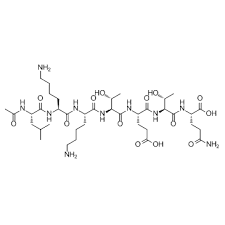
Mass spectrometry (MS) validates peptide identification by determining molecular mass with high accuracy. Modern LC-MS/MS tools attain precision partly per million (ppm), commonly less than 5 ppm. A resistance of ± 0.1%, occasionally cited for older electrospray ionization techniques, would certainly allow ± 3 Da on a 3,000 Da peptide, broad sufficient to mask abbreviated sequences or incorrect amino acid substitutions. The observed mass needs to match the theoretical mass within low-ppm accuracy on contemporary instruments. Set or lot numbers supply traceability, linking the certain COA to the exact product vial in your property.
A certification of analysis, or COA, is a document that summarizes details analytical results for a given product or set. In the peptide context, it commonly includes purity information, whole lot or batch information, test days, and the analytical technique used to create the reported outcome. The report generally determines the laboratory responsible for carrying out the analysis. Laboratories, researchers, and organizations that deal with research study peptides rely on standard logical paperwork to verify the identity and quality of study products. One of one of the most crucial documents utilized in this confirmation process is the peptide certificate of evaluation, frequently referred to as a peptide COA. Nonetheless, acknowledge that labs do upgrade their reporting formats regularly. Verifying COA authenticity needs methodical cross-referencing and, when feasible, independent confirmation. Begin by confirming the screening laboratory Protein Science exists and keeps existing certification. The fundamental function of a COA prolongs past plain regulative conformity. It offers proven proof that the peptide you receive suits what was purchased, has the stated purity degree, and is free from hazardous impurities. If the COA consists of extremely limited approach info, vague screening references, or obscure research laboratory details, it comes to be more challenging to review the logical context behind the outcome.